
Scope of implementation
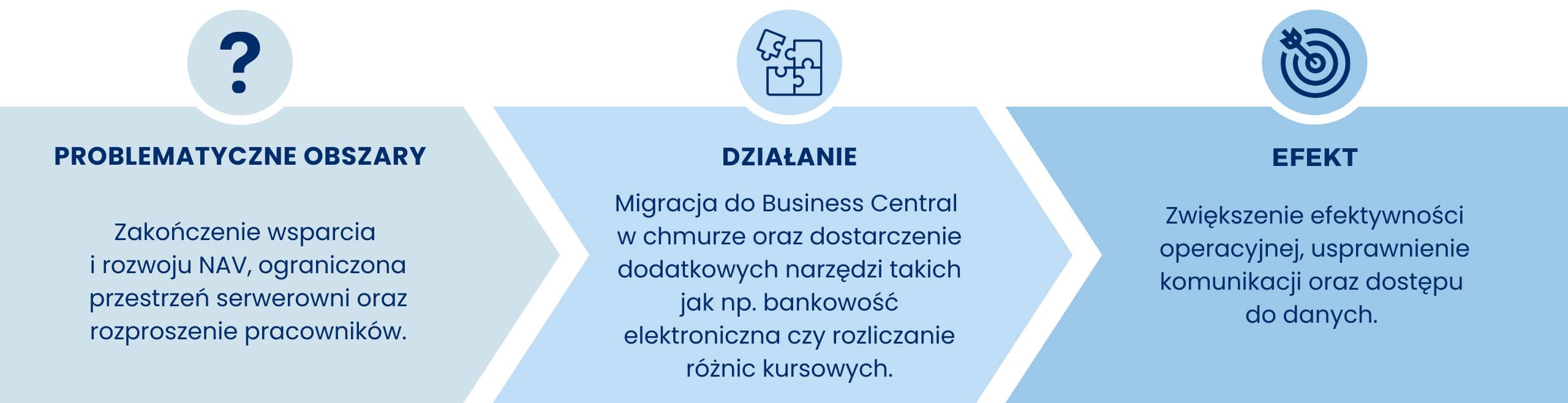
The client had previously been using Microsoft Dynamics NAV, but the lack of further support and growing organizational needs necessitated a migration to a modern cloud-based solution—Microsoft Dynamics 365 Business Central.
The change was driven not only by technological considerations, but above all by real operational challenges:
• rising costs of maintaining server infrastructure
• a dispersed team structure across the globe
• issues with system availability and stability
The move to the cloud has enabled data centralization, improved system availability, and significantly streamlined communication and collaboration among teams.
Challenges and Dedicated Options
The implementation project was carried out in a challenging environment where a standard approach was not sufficient.
One of the main challenges was limited communication with the client’s teams, due to unreliable internet access in regions where humanitarian operations were taking place.
In addition:
• Access to the systems was restricted due to stringent security requirements
• Compliance with the organization’s global procedures was required
• Integration with the existing, unsupported CRM system required a custom approach
The project required a high degree of flexibility and the ability to respond quickly to changing working conditions.
Despite the high level of complexity, all key components of the system were implemented and integrated on schedule.
Additional tools and system development
Given the specific nature of the client’s business, the implementation was expanded to include a number of custom solutions developed by NMI ERP.
Key features:
• online banking (automated batch transfers, statement import)
• multi-currency project accounting (taking into account different exchange rates)
• automated general ledger account reconciliation
• tool for reversing balance sheet valuations
A particularly important aspect was the integration of systems:
• Integration of Business Central with CRM without altering its structure
• Ability to post bank statements through CRM
• Integration with SharePoint for documents and financial data
In addition, the following were implemented:
• Automatic transfer of approved invoices to SharePoint
• Data synchronization (vendors, chart of accounts, dimensions) between systems
Implementation time
The entire process—from the pre-implementation analysis, through configuration and integration, to the system launch—took about 10 months.
The project was carried out under challenging conditions without disrupting the organization’s operations.
Benefits of implementing the changes
The system went live on March 1, 2023, and has been a key support for the organization’s operations ever since.
Key results of the implementation:
• Significant improvement in system availability (thanks to the cloud)
• Greater transparency of data and processes
• Streamlined financial and project management
• Automation of accounting and operational processes
• Integration of systems into a single, cohesive environment
In addition, the implementation was supported by a comprehensive onboarding package:
• training in Polish and English
• launch of live chat features for users
• access to detailed materials and instructions
This allowed the organization to transition smoothly to the new solution and quickly begin taking full advantage of its capabilities.
The implemented system has become the foundation for further development and effective management of global humanitarian operations.