
Scope of implementation
The Microsoft Dynamics NAV system has been in use at the company since 2014 and has been extensively used by approximately 50 employees across various departments.
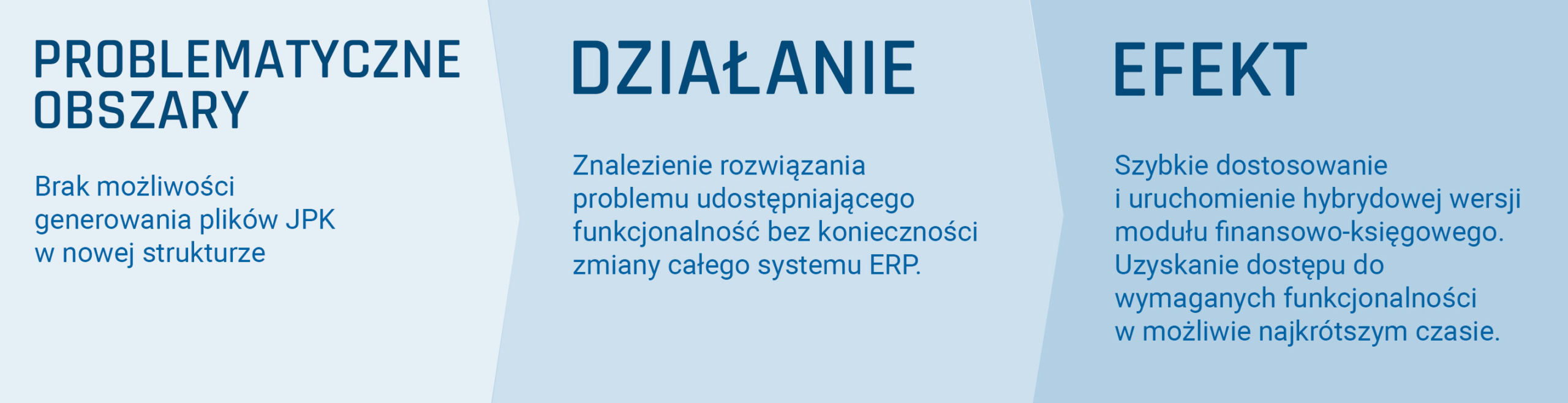
With changes to the regulations and the introduction of the new JPK file structure in 2022, the previous version of the system no longer met legal requirements.
A full migration to the new system was not possible in the short term due to:
• a large number of customizations
• the complexity of business processes
• the need to ensure business continuity
The initial workaround proved to be inadequate—it required manual labor, lacked flexibility, and limited automation.
Therefore, the decision was made to implement a hybrid model that combines the existing NAV system with the modern Microsoft Dynamics 365 Business Central.
Challenges and Dedicated Options
The biggest challenge was to quickly implement financial and accounting features that would ensure compliance with applicable regulations—without having to fully migrate the system.
A hybrid solution was designed in which:
• Data from the NAV system is automatically transferred to Business Central
• Financial and accounting processing takes place in the cloud
• Key information is fed back into the NAV system
As a result:
• Business continuity has been maintained
• The risk of errors has been eliminated
• Full automation of data exchange has been ensured
The system has also been expanded to include features that were previously unavailable, such as:
• EU VAT returns
• automatic transfers
• modern online banking
As a representative of NMI ERP points out:
“A hybrid approach involving the integration of both system versions seemed to be the best solution—it allowed us to maintain operational continuity while meeting the new requirements.”
Additional tools deployed during implementation
The transition to a hybrid model has made it possible to utilize modern analytical tools.
Power BI has been implemented, significantly enhancing our reporting capabilities.
The new features include:
• Margin reports tailored to the company’s specific needs
• Visual analyses of complaint rates
• Modern management reports
As a result:
• Data is more readable and accessible
• Reports update automatically
• Management has quick access to key information
Implementation time
The entire process—from needs analysis to solution development and launch—took just six weeks.
Benefits of implementing the changes
After implementing the hybrid model, the company gained a flexible and secure work environment.
Key results:
• Ability to generate valid JPK files
• Retention of the current operating system
• Access to modern cloud-based features
• Full automation of financial processes
In addition:
• Reporting capabilities have been expanded through Power BI
• The level of operational automation has been increased
• The company has been prepared for a future full migration to the cloud
As the Chief Accountant points out:
“The hybrid solution has provided us with stability and security. We have access to the latest system while maintaining business continuity. Our collaboration with NMI ERP was fast and effective.”
Summary
The implementation of a hybrid ERP model at Opinion is an example of a practical approach to system transformation—without risk, downtime, or a costly overhaul.
Instead of a full migration, the company gained:
• regulatory compliance
• modern financial tools
• greater control over data
• the ability to continue moving toward the cloud
This solution demonstrates that an ERP transformation can be carried out in phases—maintaining stability while simultaneously expanding business capabilities.